Bhaun: The Ancient Town of Chakwal
The history of Bhaun, one of the oldest towns of Chakwal: its ancient origins, its role as a trading mandi, and the famous sons of its soil.

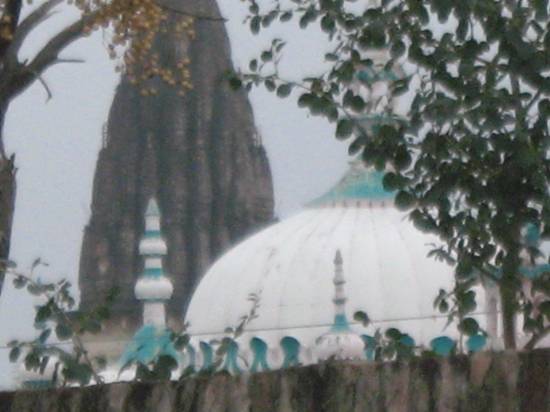
Bhaun (formerly Bhavan, meaning "house") is one of the oldest and largest towns of Chakwal District in the Punjab province of Pakistan, lying about 12 kilometres south of the district capital, Chakwal, along the Chakwal–Sargodha road. For centuries it was the commercial heart of the surrounding Dhani tract, a region long famed for breeding fine horses and cattle.

An ancient settlement
The antiquity of Bhaun is well documented. General Alexander Cunningham, who surveyed the area between 1870 and 1880 for the Archaeological Survey of India, recovered some 285 old coins here — firm evidence of the town's age. Historians have linked Bhaun with the ancient land of Aspanies, from where, according to the Greek historian Herodotus, Alexander the Great obtained countless horses and oxen. In Persian, asp means "horse," and a nearby place still known as Sapanwali may preserve the older name Aspanwali.
According to the Chach Nama, the town is said to take its name from Raja Bhaun, a descendant of Raja Dahir of Sindh, whose family migrated north toward Kashmir and the Dhani region after the defeat by Muhammad bin Qasim. The renowned local historian Professor Anwar Beg Awan traced references to the area as far back as the Mahabharata, identifying it with the capital of Daroopad Nagar.

A centre of trade and culture
By the 1901 census, Bhaun had a population of 5,340 and was among the biggest towns of Chakwal Tehsil, then part of Jhelum District. Before Partition the town's majority was Muslim, but much of its economic and social life was led by a prosperous Hindu trading community. Bhaun functioned as an unofficial mandi (market) serving the Dhan, Vanhar and Soon valleys, and a special magistrate's court sat here as early as 1857. The town even had its own railway station on the line that ran from Mandra; the importance of restoring this service to the salt-range and Kallar Kahar area — with its cement factories — has long been discussed.
The Mair Minhas Rajput tribe rose to prominence here under the later Mughals, and the town served as a centre for revenue collection during Mughal and Sikh times. Maharaja Ranjit Singh himself visited Bhaun in 1810 to organise revenue collection from the Dhani chiefs.

Sons of the soil
Bhaun has produced figures of national and international standing. Raja Ghulam Hussain (b. 1885), a graduate of Aligarh College and a close friend of Allama Muhammad Iqbal and Quaid-e-Azam Muhammad Ali Jinnah, was an influential figure in the Muslim independence movement and is associated with the Lucknow Pact of 1916. The hotelier Mohan Singh Oberoi, founder of the worldwide Oberoi hotel chain, was born in Bhaun in 1898. The town is also remembered as an ancestral home connected to the Datt family of the Indian film industry and to the family of the legendary music composer Madan Mohan.
A heritage worth preserving
Bhaun's landscape still carries the marks of its layered past: as many as ten Hindu temples (several attributed to Hanuman), the magnificent Marri and Janj Ghar havelis with their carved doors and wooden balconies, Sufi shrines, and the centuries-old fort of the Qarlugh sultans. Much of this heritage is now fragile. Documenting and protecting it is one of the purposes of this community website.
Courtesy: Great Chakwal (great-chakwal.blogspot.com). Historical material draws on the works of Safdar Faizi, Prof. Anwar Beg Awan and Zulfiqar Ali Kalhoro. Images via Wikimedia Commons.